Garden Centrum
Creating a YearRound Color Palette for Your Garden
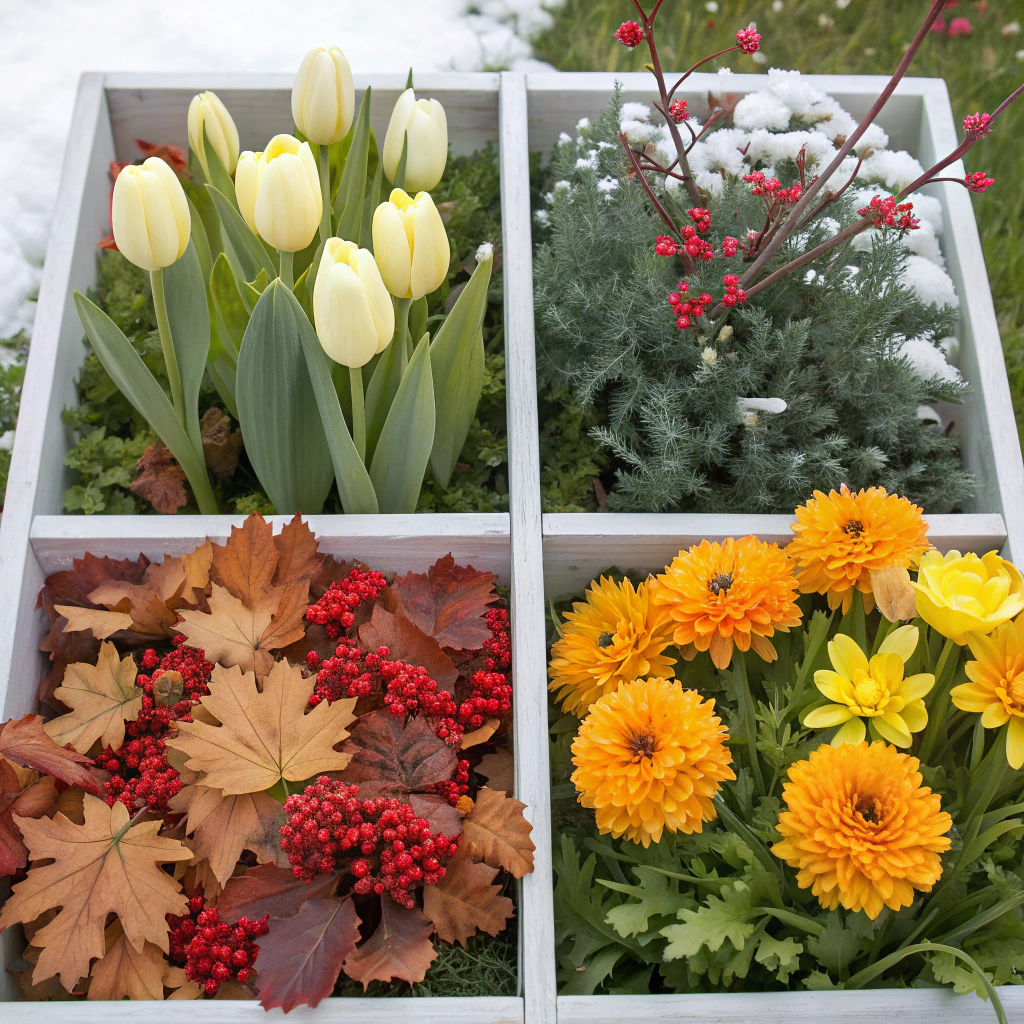
A garden that offers color every month reflects the thoughtful curation typical of premium editorial design. By mapping bloom periods and foliage hues, you can achieve a seamless, year‑round palette.
Seasonal Bloom Mapping
Begin with a simple chart:
| Season | Key Bloomers | Foliage Accent |
|---|---|---|
| Spring | Forsythia, Tulips, Early‑blooming Clematis | Soft grey‑green foliage of Heuchera |
| Summer | Roses, Lavender, Daylilies | Silver‑blue leaves of Salvia officinalis |
| Autumn | Chrysanthemums, Asters, Japanese Anemone | Copper‑red foliage of Rhododendron |
| Winter | Witch Hazel, Hellebore, Camellia | Evergreen needles of Juniperus |
Color Harmony Rules
- Analogous: Choose plants with colors next to each other on the color wheel (e.g., blues and greens) for a soothing effect.
- Complementary: Pair opposite hues (e.g., purple and yellow) for subtle contrast without visual chaos.
- Monochromatic: Vary saturation and texture within a single hue for refined elegance.
Integrating Foliage Textures
Beyond flower color, consider leaf texture—smooth, variegated, or feathery—as a neutral backdrop. Plants like Hosta “Patriot” (blue‑green leaves) or Ferns add depth while allowing blossoms to stand out.
Practical Implementation
- Draft a garden map dividing the space into zones.
- Assign each zone a dominant seasonal theme.
- Place taller, structural plants (e.g., ornamental grasses) at the back, mid‑height bloomers in the middle, and low‑groundcover or edging plants at the front.
- Review the map quarterly to ensure overlap; adjust with late‑season bloomers where gaps appear.
Following this curated approach creates a garden that mirrors the timeless, balanced visual language of Garden Centrum’s website—offering readers both inspiration and a practical framework.
Author

Name
title
Current Posts
post
Categories
© 2026 All rights reserved. link.com